Saturday, February 6, 2010

Mourning

My friend Landon is one of the more inspirational presences in which I've ever been. A lanky transplant from Vermont, I described him the other day as "something of an urban Tom Bombadil", JRR Tolkien's cheery mystical nature-presence. Landon stoops on a dingy subway platform to scoop up trash; when we meet in Manhattan, en route to his house uptown, he inevitably winds up at Harlem House with palms stretched out over fast food bags, paper trash, and plastic bottles, depositing them in his trash can or recycling bin. Landon talks to strangers when it is incredibly inappropriate, and Landon smiles at people in a city where glances shouldn't - don't - linger too long.

Landon is either incredibly deluded, in extremely specific ways, or an unprecedented blessing to this city around him.

I trailed behind Landon yesterday, as he wound his joy-bearing way through the city, wondering where my own sense of childlike glee and sharing went. After all, isn't this world meant to be a community? And community relies upon openness.

Yes, this is an idealistic thought - but I am OK with being an idealist. They don't crucify men for being realistic: a realist is accepted, even if disagreed-with. An idealist is scorned, even when agreed-with.

This is mourning, I think. I'm discovering that to mourn cannot be equated with merely being sad. Mourning is harder, and better, than sadness. To be sad is to feel sadness. Mourning is not an emotion - mourning is a process. You know, I am sure - we all know, I believe - that feeling of an utter and unbelievable frustration, when all that is within you cries out that this should be but then all that is without you shouts back but it will not. When there is something you truly, really hope for - not just want, but need - and yet everything tells you, you cannot have it!

This is the definition of mourning I'm coming to have: the state of disengagement between what should be and what is.

The loss of innocence. I look into my life, and I see my innocence dying. Harsh language - towards myself, towards other people, towards the world - comes faster to my lips. I'm a little faster to be cynical; my laughter sounds mocking, sarcastic. I no longer just laugh; I have to laugh at things. All of us express it in different ways:

-We drink a little more.
-We go farther or faster when we hook up.
-We value money more, and our dreams less.

Loss of innocence. I think this is what happens when we mourn at length, without hope. We lose our innocence - our dreams of what should be. What is an "innocent thought"?

-That love means not getting divorced?
-That innocent people won't get hurt?
-That a community can be a real reflection of love, acceptance, and forgiveness?
-That our purpose in this world is to make a change, not only to make a living?
-That people can care for a stranger?
-That it will be better to do what is right than what is easy?

These are all hopes that I know I've had - that I'm sure some of you have had - that my experience of this world tries daily to shut down. To tell me is my own idiocy, ridiculousness.

But WHATEVER! WHAT. EVER. I am OK with being ridiculous! This is something that the world did not expect. I am OK with being a fool, being an idiot. No, I want to be more of a fool. If that means being more like Landon - being more like Lucas - being more like Jesus of Nazareth, the ridiculous son of a carpenter who said that he was God - then YOU LOSE, WORLD. You are powerless over me, because I don't care about being made a fool.

Well. I do. But I don't want to. I'm going to pray to continue to find the strength to keep on mourning.

Matthew 5:4 - Blessed are they that mourn; for they shall be comforted.

Wednesday, February 3, 2010

The Responsibility of Christians in Art.

[A talk originally presented during Café a Dieu, at The Golden Center, on 04.04.2009.]

The first personal encounter with art that I can recall comes from the age of ten, when my sister and I attended a class taught by a professional artist from our church. Once a week, we would pick up our sketchbooks and shoeboxes full of art supplies, be packed up in the back of our minivan, and dropped off at a church classroom. There, Mrs. Barrett would teach us about perspective, colors, or shading, then turn us loose, pencils and oil paints in hand. Our parents, as they arrived to pick us up, were be greeted by arms filled with paintings and sketches, the fruits of our labors and their monthly tuition checks.

Even now, returning home, I still occasionally come across sketchbooks filled with my youthful handiwork. Browsing through the artwork, I often wonder what my mother must have thought, every week, as her son returned bearing page after page of lovingly, painstakingly, and poorly drawn STAR WARS spaceships.

My mother has preserved sketchbooks that are literally filled, cover to cover, with illustrations of X-Wings, TIE Fighters, and the occasional attempt to illustrate the Battle of the Death Star. And, let me tell you: what I lacked in aesthetic skill, I more than made up for in productivity.

By high school, I had begun to regard these drawings with a hint of embarrassment. It wasn’t that I had grown artistically; but I had grown ashamed of my youthful enthusiasm for Luke Skywalker. Recalling my younger artistic streak, I would wonder what could possibly have motivated my parents to store such pitiful things away so carefully.

Reflecting back now, I think I’ve begun to understand why my parents saved those drawings. It’s not that my art - in either content or execution - was of any aesthetic value. But they are still dear to them because of what they represent: memories of me running up to my mom after class, bearing my latest work, filled with the childish joy and simple pride of spending my youthful reserves of skill and energy to produce something just for her. And, while my mother has never been a STAR WARS fanatic, her love for me transformed my interests and delight into her own. For this reason, I think, my mother finds twofold pleasure in that artwork: first, as a symbol of her importance to me; and, second, as a genuine representation of me as I was at the time; my childhood interests and passions.

I suspect that the work of a Christian Artist is best performed when it stems from similar desires, turned towards God: beyond displays of ability, or the production of aesthetically stunning works, the Christian who finds herself engaged in Art is engaged in the same pursuit as that child painting, singing, or dancing for his loving parents: we are conveying, to God, His unequalled significance to us; and we are producing work that brings its audience into an honest encounter with the truth of our love and passions.

I. To convey to God our unequalled enjoyment of Him.

These may sound vague: what does it mean to tell God that He is of unequalled importance to us?

The first answer that springs to mind comes from the Protestant and Catholic catechisms, which open by addressing the goals of human existence: in the Reformed Church’s Westminster Shorter Catechism, the first question is asked, What is the chief end of man?, and this answer provided: Man’s chief end is to glorify God, and to enjoy Him forever. Similarly, the Second Catechism of the Roman Catholic Church begins with a prologue that trumpets that “The Life of Man” has as its purpose “To Know and Love God”.

To Know God; to Glorify Him; to enjoy Him; to Love Him. If these are the primary ends for which we, as Christians, believe we have been created, how do we pursue them? How do we, limited, weak, fragile human beings, bring Glory to an almighty God?

In 1st Peter Chapter 2, Verse 9, the apostle writes that “you are a chosen people, a royal priesthood, a holy nation, a people belonging to God, so that you may declare the praises of him who called you out of darkness into his wonderful light.” Receiving the love and care of a vast and intimate God uniquely enables us to bring Him glory by proclaiming in His presence our joy at having seen ourselves “called out of darkness, into His wonderful light”. We were once guilty of an infinitely terrible crime, and faced with an infinite punishment, the only escape from which comes by an infinite grace, which, having been received, evokes in us infinite gratitude and joy.

And, in just the same way that my youthful dedication to my parents led me to hand them the fruits of my artistic labor – poorly executed, but faithfully offered – our infinite gratitude to God finds its expression in faithfully handing Him the poor fruits of our lives: our paintings and poems, songs and dances. In every facet of our selves, including the artistic, it is right to find ourselves desiring, first and foremost, to bring God praise, by demonstrating the quality and abundance of our lives in Him. As we begin to understand what it really means to be saved by grace, this desire to respond in joyful gratitude begins to push out all the other competing desires and patrons clamoring for our attention and service.

But, there is an objection that can be raised to all this; after all, it may sound troubling to limit the scope of our artistic expression simply to those things which bring God glory. After all, why can’t we let art be free of such external constraints, let it simply be “art for art’s sake”?

Well, for one thing, love, even as it brings freedom, also necessitates limits. Any mutual love imposes on the lives of those whom it touches; but it is a joyful imposition! Yes, Love limits us; it limits us in our impatience, when we desire to withhold forgiveness; It restrains us in our jealousy, in our boasting, in our pride, and in our anger. Love, when truly tasted, makes us long to stare into its depths and lose sight of everything else as we contemplate and adore the object of our love.

II. To provide audiences an honest encounter with the truth we find surrounding us.

And also, by saying that our art should bring God glory, I don’t simply mean that the truths we convey have to be uniformly pleasant.

A natural part of becoming a Christian is that a man gradually finds himself peering into two worlds at once: the world that is “real-at-the-moment”, and the world of “actual reality.” The world of the moment is the world of suffering, of distance, of sin; but, being brought more and more sharply into focus as we grow more familiar with God, is the world as it actually was intended to be: a world of peace, of intimacy, of healing and loving unity.

This is what I mean by saying that it the second goal of the Christian Artist to provide the audience with an honest encounter of truth: God’s revelation of Himself – at once intimately personal and immensely large-scale – provides the Christian with two points of view, both of which serve the artist as inspiration. To limit the scope of artistic revelation to one or another of these viewpoints rings false: while our hope is sure and our faith secure, to claim that we can distill our experience of Christ into feel-good, pastel-colored images of serenity and passivity is a dramatic oversimplification. If we do so, we create kitsch, a shallow sentimentality that is the opposite of Good Art, because it has no connection to the complex experiences and dreams of the audiences we invite to partake in the artistic experience with us.

The opposite oversimplification – presenting the dire state of sin, while withholding a sense of overpowering hope – is equally poor art, for it is also untrue. As Christians, for whom “in all things, we are more than conquerors, because of Christ who loved us” (Rom. 8:37), it is disingenuous to pretend that our eternal well-being can be jeopardized by the passing and momentary ills of this world.

We Christians have space to discuss both despair and hope precisely because our hope can be counted on to endure. In the Christian life, there is room for both the sad truth of the fallen world as well as the glad tidings of the redemption that is beginning to shine through its cracks. After all, without death, resurrection is meaningless; but, without resurrection, death is simply a cold, inevitable end-of-story. So it is necessary to present, in our every creative work, the full trajectory of the Gospel, never shrinking from honestly portraying the total story of fallenness and redemption; but always hinting at glimpses of the Hope to overcome the despair, and the Comforter who seeks us out in our loneliness.

Art expresses the truth, hope, and passion that we have found, or want to find, in the world around us. At age 10, I found my passion in STAR WARS; and my art reflected that. But now, for today, and tomorrow, and increasingly as the days pass, that passion is focused on the being and character of God. And I hope that the work of my hands can come to daily reflect that focused passion more and more.

Once, I drew pictures of spaceships, and happily presented the results of my work to my parents. Today, right now, we are all creating, not just as artists, but as humans going about our daily lives. I pray that we can, one day, happily present the results to our Heavenly Father.

Wednesday, January 27, 2010

To the rulers.

10 The righteous will be glad when they are avenged,
when they bathe their feet in the blood of the wicked.

11 Then men will say,
"Surely the righteous still are rewarded;
surely there is a God who judges the earth."

(Psalm 58:10-11)

Finding myself the sole attendant at our nightly prayer meeting on Monday, I scrolled through my Bible and found myself face-to-face with Psalm 58. Ever since, I've been reflecting, mulling over these verses.

Even a preliminary read-through reveals the stark and gory tone of Verse 10, contrasting even with the angry and intense need seeping throughout David's repeated cries for divine retribution against his persecutors. The image - a man rejoicing in his enemy's maiming and thorough slaughter, dabbling his feet in the carnage - is shocking. Horrific. This isn't your grandmomma's Bible (actually, it probably is - I've discover that grandmommas can be shocking and wonderfully incisive individuals).

Being honest, part of me recoils to read these verses. Even as I worked my way through them again, my mind squirmed - wriggling left and right to find a way to excuse, to write off these words, anything to distance myself from their utter gore, the naked anger and vengeful bloodthirst that roars from the lines.

But there simply isn't a convenient answer. To write them off as uninspired, merely human, ungodly, calls into question what I hold most dearly, most truly Good: that the Bible is, in its entirety, precisely the fantastical sort of artifact or relic of which dreams and stories boast, around which epics are constructed and over which kingdoms were wagered. It is such, precisely because at its core it is the inspiration and mind of God brought into language, in the very same way that Jesus Messiah is the person of God brought into human flesh.

But then what? If the Bible is inspired - for every reader, in every context - then there must be something in these words for me: "The righteous will be glad when they are avenged, when they bathe their feet in the blood of the wicked." Should I, then, look forward to divine vengeance being called down upon my enemies - to the slaughter of all who have wronged and slighted me?

I don't think so.

1 Do you rulers indeed speak justly?
Do you judge uprightly among men?

2 No, in your heart you devise injustice,
and your hands mete out violence on the earth.

(Psalm 58:1-2)

The word translated above (in the NIV) rulers is only found twice in the entire Bible, and once - here - in its content (the other is the title of Psalm 56).

Variously translated gods, congregation, or judges, this word implies a silent host - the root is a word, silenced or made dumb - of distant and careless men passing judgment arbitrarily, with no thought in mind to the well-being of either accuser or accused. By referencing these judges with this term, the question answers itself:
do they speak justly? Do they judge uprightly? No!

They are, in fact, not judges at all: for, as verse 2 continues speaking, these men "devise injustice... mete out violence on the earth." These men are, in fact, anti-judges: rather than prescribing all that is Good and Just, they pronounce hatred, evil, violence - wickedness.

The men being addressed by David are thugs, plain and simple. And evil, whether through physical might or instead the subtleties of political, economic, or social power, is not content in merely wallowing in its own depravity. Hatred is no more than a cheap perversion of love: and, as love desires another beside itself to serve, sacrifice for, and rejoice in, hatred finds its depressive slyness most low and darkly attractive when there is someone whom it can oppress. In addressing these wicked rulers, David implicitly notes the presence of a third party in the equation: the oppressed.

So, from the very first verse of this Psalm, there are two parties: the evil men, silently and wantonly immoral, to whom David addresses himself; and their oppressed.

In which group do we find the righteous?

It's not an enormous leap of logic to see that David is identifying the righteous with the oppressed. Having been oppressed, these righteous men do and will cry out to a Heavenly Judge - and find Him, in the end (Verse 11), not silent on the subject of the farce of justice that has been contrived by the wicked judges. As the True Judge comes forth, the wicked judges will be crushed, dismantled, maimed - and the righteous will rejoice, their sufferings not forgotten, but transformed into victory over their oppressors.

Who am I?

Having this revelation, you would think that my curiosity over these verses would have been satisfied. But rather to the contrary, I instead found myself rather discomforted. The source of the discomfort being, I found, this uncomfortable inquiry: to which of these parties do I belong?

After all, while I would love to identify myself with the righteous (who wouldn't?), I don't know if I can honestly do so. If, as I suspect, David is equating the righteous with the oppressed - and the wicked, conversely, with the oppressors - I don't know if I can in any clear conscience label myself as the former. While I have been slighted - hurt - even, perhaps, abused - I cannot say that I find myself the victim of some grand scheme of social, political, or religious neglect. I have no impotent rage, no tears of frustration and soul-shaking indignation at the wrongness of the world around me. My parents are not slave labor, living in a heap of waste; my sister has not been kidnapped to be raped; I am not being forced to kill, to labor, to die. Unlike the majority of the world's population, I - at least, at the moment - am not being conned, manipulated, coerced, or exploited to a gross degree.

But if I am not being oppressed.... then is it possible (is it?) that I am the oppressor?

Am I the one whose money is being funnelled - whether through taxes, discretionary spending, or the corporations providing my daily needs - into entities and companies whose actions are destroying the lives, bodies, and dignity of the oppressed? Am I - in my Nike shoes and Levi's belt, using my Toshiba computer and eating my McDonald's burgers - telling men and women that I'm OK, they can go ahead and use that underage labor, destroy small businesses, and corrupt entire countries' water tables, clean air, and forests?

I don't know if I am. I pray that I am not - but I fear that I am. And thinking this, reading through Psalm 58 again, I shudder. Because the True Judge is coming, and His coming is certain; and when He comes, He will judge the earth - He will bring Justice to the oppressed and oppressor alike.

Do I find myself on the side of the oppressed, the hurt, the poor - the victorious, the saved, the redeemed?

Or am I, too, yet another one of those who abuse, exploit, commodify - the wicked, the oppressors, the ones at whose downfall their enemies will rejoice and heaven will say, now all is made well

I shudder, and I pray.

In the Beginning.

Even the humblest of things can spring from a humble beginning; and this is, I fear, the humblest of beginnings. A free registration, a quick import - and done!

For a long time, I have been using various personal blogs (first my now-long-obsolete Xanga; and then my current blogspot, American Dream, Chinese Hero) to publicly muse and comment on this journey of faith within which I find myself; and all the topics thusly pertinent.

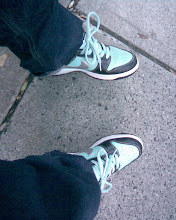
And so, one might have found within a week, posts on a new hot verse from Joe Budden, pictures of my new sneakers; photographs from a church event, commentary on race relations in Korea, and reflections on Scripture.

This multiple-personality digital beast had, somewhat sadly, to go: and now I find myself with a hydra of sorts, with this present blog being the head speaking most, I think, confusedly and blasphemously (I pray not).

For formal and informal reflections on Evangelicalism, ministry, the global Church, Scripture, and faith, seeking my name will henceforth be my venue of expression.

Names, in short, have power: when they are forced onto us (as by a schoolyard bully), they are repugnant, hateful, instruments of spite and derision. When snatched from the lips of a lover, they are glorious, shimmering, eternal things.

As a Christian, one of the things to which I cling dearly - desperately - is the thought that my name - given to me not only by my earthly parents, but my eternal Father - is written "in the Book of Life", a book within which no hand could ever dare raise the power to blot or inscribe a single character.

The Biblical conception of naming is an interesting thing: not only does a name describe who we are, a well-chosen name - a true name, as it were - prophecies (tells the truth) about who we will be. Names are not only references, but serve as stories - signifiers - prescriptions.

As a young, immature man seeking - seeking Christ, God, Grace, and Love - I think, ultimately, I and all others who are on a journey of faith are simply seeking our names. Our true, eternal, right names.

In short
  1. American Dream, Chinese Hero will continue on as my informal personal blog, for dissemination of photographs, personal updates, and my music.
  2. Iason De Silentio - a formal ethnic studies blog, particularly touching on current events, Asian and Asian-American studies, hip-hop culture, and philosophy (primarily ethics) blog.
  3. and finally, as you have no doubt discovered, seeking my name - A reflective and contemplative faith and ministry blog, discussing Christian living, Evangelicalism, Scripture, and theology.

Tuesday, January 19, 2010

An exercise

"Jesus’ College is the only one in which God’s truth can be really learned; other schools may teach us what is to be believed, but Christ’s alone can show us how to believe it."
- Charles Spurgeon, Morning and Evening, Evening Jan. 19.

Recently, a friend lent me God in the Dock, a collected edition of C.S. Lewis' minor writings and shorter presentations. Among them is Meditation in a Toolshed, a brief piece in which Lewis speaks about the distinction between looking at and looking along. Reading tonight's Morning and Evening - a twice-daily devotional to which I have often turned in my quiet times of contemplation - I was struck by the parallel thrust of Spurgeon's rumination.

In Toolshed, Lewis distinguishes looking at from looking along along an experiential axis, similar to the research method distinction between, respectively, grounded theory and participant-observer strategies of data collection and interpretation. In short, the metaphor Lewis constructs is based on the familiar analogy of revelation as a source of light: envisioning a beam of light cast onto an object, looking at the ray grants information about the light itself, while looking along the light reveals knowledge about the source and target of the emission.

Lewis' privileging the latter over the former seems a priori, but I think that there are fair arguments to be made in support of looking along versus looking at. Both positions bear reasonable and seemingly non-trivial epistemic value. But what may grant us liberty to preference looking along over looking at is the existence of convincing order in the revelation.

That is to say, revelation, and specifically the Christian revelation, is itself ordered in an intuitively convincing manner: a beam of light hitting the blank wall of the toolshed may be dismissed as a random structural failure, while a beam of light illuminating a carving on the ground is not so easily dismissed. The question then is whether the information revealed by participating in the Christian process - looking along - is of the former or latter quality.

Adding to the difficulty of processing this information is the hypothesis that the results are biased through human intervention. After all, alternative beams of light exist, striking seemingly intentional points on the ground, and it seems a fairly foundational part of participating in looking along that looking along one source of revelation is mutually exclusive with others. So, one of the common claims of those looking along a particular light is that the other lights are false constructs, illuminating points (metaphysical/theological points, that is) that may seem appealing but are, in fact, only so because they are intended by human effort to be so rather than divine effort.

Spurgeon's quote is situated in similarly hairy territory. All the issues raised with Lewis' beliefs - and more - can apply here. It is interesting that both predicate "real learning" with participation: learning is distinguished from learning about. There is something about active, personal, engagement that is valuable to both authors - and it is very attractive to me, too. But it seems as though much post-Enlightenment/Rationalist thought has found itself striking an antagonistic position, claiming that personal investment in a situation has quite the opposite effect: rather than granting knowledge in a particularly valuable way, it taints what data is gathered. Is this an intractable disagreement? One wonders.


There are far more issues in this exploration than I can adequately here address. I like both the ideas expressed by Lewis and Spurgeon. In both cases, there is great intuitive appeal, but it is difficult to articulate the basis - defending the premises - of the appeal. Perhaps one either "feels it" or doesn't.

Merely an exercise in rigour.

When Your Heart Stops Beating

[reposted from an email originally dated 1/7/10]

Hey, friends;

The title of this email comes from a song by (+44), a little-known (I guess?) band, better known as a side project started by two of Blink-182's members while the latter was on hiatus.

Now, I haven't actually listened to this song in a while; but as I reflected on what God's been working on in my life over last couple of days, (+44)'s lyrics just leapt up from my subconscious:

I'll be there when your heart stops beating
I'll be there when your last breath's taken away
In the dark when there's no one listening...

Take a look at what that chorus is saying - and then take a look at these verses:

"Whatever happens, conduct yourselves in a manner worthy of the gospel of Christ. Then, whether I come and see you or only hear about you in my absence, I will know that you stand firm in one spirit, contending as one man for the faith of the gospel
"without being frightened in any way by those who oppose you. This is a sign to them that they will be destroyed, but that you will be saved—and that by God."
(Phil 1:27-28)

This isn't really a secret: in high school, I was a pretty emo kid. There may even be (there are) a few composition books back at my parents' house filled with scribbled, angsty poems and lyrics. OK, actually I was a super emo kid - pretty out of control. To the point where my emotional baggage actually got me rejected from MIT (ask if you want to hear the story some time).

Thankfully, God has since changed me radically, into a very different person - in my attitude, hopes, dreams, and thoughts. But, when it all comes down to it, I still find the same desires that fueled my pubescent angst comprising a large part of my motivations.

What are those desires? Pretty simple, really: I don't want to be alone. I don't want to be a failure. I want my life to have meaning, shape, direction.

I thought, when I began seeking God at the end of high school, that I'd put all that in the past: I truly listened to the Gospel for the first time, accepted Jesus as the Creator, Sustainer, and Savior of my life, and found Him to be The Answer:
Lonely? "I will never leave you, nor forsake you."
A failure? "By grace you have been saved, through faith; not coming from your own works, so you cannot boast about it."
Directionless? "I am the Way, the Truth, and the Life."

So, Jesus is The Answer - right?

...

For the past few days, I have found myself repeatedly agonizing over some things that have been laying heavy on my mind. Last night, chatting with Steve Yu '07 for commiseration and advice, he encouraged me to place myself again in front of God, in His hands. OK, I thought to myself - haven't I been doing that? And still, the worrying, the anxiety, the background angst, continue.

Still, knowing that it was the right thing to do - and having thought it over til my brain whirled - I laid down, prayed, and picked up a daily devotional by Charles Spurgeon, which referenced Philippians 1. And so I read the verses above:

"Whatever happens, conduct yourselves in a manner worthy of the gospel of Christ.
Whatever
happens?

"
This is a sign ... that you will be saved—and that by God."
Hmm... I will be saved... by God.

And I had a moment of clarity. In which I realized:

God is my life.

Joy and hope in my life don't come from my job; my girlfriend; my health, finances, or any other measure of success.

Over the past few days, I had been inadvertently narrowing down my focus, closing my eyes against everything else except a few, specific, areas of my life.

But, last night, God forced my eyes open again, and reminded me where my future is actually centered. He is the one who redeems my life; He is, as I've heard - and even said - so many times, the Creator and Sustainer of my soul. So, whatever may happen - personally or professionally; physically, emotionally, or spiritually - it is to God that I will look for salvation.

It's funny: for the past few days, as I felt myself wrestled down by worry and anxiety, I tried everything (well, not everything) to comfort myself. And most of that just came down to me thinking around in repetitive circles, listening to my own internal counsel repeat endlessly. And not a single bit of that brought me any relief.

But as soon as God reminded me that my life is not, ultimately, about my self but rather about Him, all the anxiety, the concern, the worry came crashing down. And I could even laugh, knowing that, in the end, all of these concerns are truly miniscule compared to the very good, very beautiful, utterly satisfying and hope-fulfilling end of a life lived in the presence and glory of God.

I'm sad and glad, friends.
Sad that I have so easily let my vision narrow down into a tiny sliver of what vistas it could be perceiving.
Glad that I remembered the one thing of value that I have: the God who is always there.

I'll be there when your heart stops beating
I'll be there when your last breath's taken away
In the dark when there's no one listening...

Thank God.

Wednesday, January 6, 2010

truer words

"Give all your worries and cares to God, for he cares about what happens to you."

I love these words.