Wednesday, January 27, 2010

In the Beginning.

Even the humblest of things can spring from a humble beginning; and this is, I fear, the humblest of beginnings. A free registration, a quick import - and done!

For a long time, I have been using various personal blogs (first my now-long-obsolete Xanga; and then my current blogspot, American Dream, Chinese Hero) to publicly muse and comment on this journey of faith within which I find myself; and all the topics thusly pertinent.

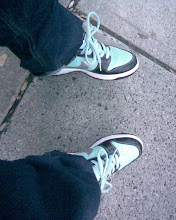
And so, one might have found within a week, posts on a new hot verse from Joe Budden, pictures of my new sneakers; photographs from a church event, commentary on race relations in Korea, and reflections on Scripture.

This multiple-personality digital beast had, somewhat sadly, to go: and now I find myself with a hydra of sorts, with this present blog being the head speaking most, I think, confusedly and blasphemously (I pray not).

For formal and informal reflections on Evangelicalism, ministry, the global Church, Scripture, and faith, seeking my name will henceforth be my venue of expression.

Names, in short, have power: when they are forced onto us (as by a schoolyard bully), they are repugnant, hateful, instruments of spite and derision. When snatched from the lips of a lover, they are glorious, shimmering, eternal things.

As a Christian, one of the things to which I cling dearly - desperately - is the thought that my name - given to me not only by my earthly parents, but my eternal Father - is written "in the Book of Life", a book within which no hand could ever dare raise the power to blot or inscribe a single character.

The Biblical conception of naming is an interesting thing: not only does a name describe who we are, a well-chosen name - a true name, as it were - prophecies (tells the truth) about who we will be. Names are not only references, but serve as stories - signifiers - prescriptions.

As a young, immature man seeking - seeking Christ, God, Grace, and Love - I think, ultimately, I and all others who are on a journey of faith are simply seeking our names. Our true, eternal, right names.

In short
  1. American Dream, Chinese Hero will continue on as my informal personal blog, for dissemination of photographs, personal updates, and my music.
  2. Iason De Silentio - a formal ethnic studies blog, particularly touching on current events, Asian and Asian-American studies, hip-hop culture, and philosophy (primarily ethics) blog.
  3. and finally, as you have no doubt discovered, seeking my name - A reflective and contemplative faith and ministry blog, discussing Christian living, Evangelicalism, Scripture, and theology.

Tuesday, January 19, 2010

An exercise

"Jesus’ College is the only one in which God’s truth can be really learned; other schools may teach us what is to be believed, but Christ’s alone can show us how to believe it."
- Charles Spurgeon, Morning and Evening, Evening Jan. 19.

Recently, a friend lent me God in the Dock, a collected edition of C.S. Lewis' minor writings and shorter presentations. Among them is Meditation in a Toolshed, a brief piece in which Lewis speaks about the distinction between looking at and looking along. Reading tonight's Morning and Evening - a twice-daily devotional to which I have often turned in my quiet times of contemplation - I was struck by the parallel thrust of Spurgeon's rumination.

In Toolshed, Lewis distinguishes looking at from looking along along an experiential axis, similar to the research method distinction between, respectively, grounded theory and participant-observer strategies of data collection and interpretation. In short, the metaphor Lewis constructs is based on the familiar analogy of revelation as a source of light: envisioning a beam of light cast onto an object, looking at the ray grants information about the light itself, while looking along the light reveals knowledge about the source and target of the emission.

Lewis' privileging the latter over the former seems a priori, but I think that there are fair arguments to be made in support of looking along versus looking at. Both positions bear reasonable and seemingly non-trivial epistemic value. But what may grant us liberty to preference looking along over looking at is the existence of convincing order in the revelation.

That is to say, revelation, and specifically the Christian revelation, is itself ordered in an intuitively convincing manner: a beam of light hitting the blank wall of the toolshed may be dismissed as a random structural failure, while a beam of light illuminating a carving on the ground is not so easily dismissed. The question then is whether the information revealed by participating in the Christian process - looking along - is of the former or latter quality.

Adding to the difficulty of processing this information is the hypothesis that the results are biased through human intervention. After all, alternative beams of light exist, striking seemingly intentional points on the ground, and it seems a fairly foundational part of participating in looking along that looking along one source of revelation is mutually exclusive with others. So, one of the common claims of those looking along a particular light is that the other lights are false constructs, illuminating points (metaphysical/theological points, that is) that may seem appealing but are, in fact, only so because they are intended by human effort to be so rather than divine effort.

Spurgeon's quote is situated in similarly hairy territory. All the issues raised with Lewis' beliefs - and more - can apply here. It is interesting that both predicate "real learning" with participation: learning is distinguished from learning about. There is something about active, personal, engagement that is valuable to both authors - and it is very attractive to me, too. But it seems as though much post-Enlightenment/Rationalist thought has found itself striking an antagonistic position, claiming that personal investment in a situation has quite the opposite effect: rather than granting knowledge in a particularly valuable way, it taints what data is gathered. Is this an intractable disagreement? One wonders.


There are far more issues in this exploration than I can adequately here address. I like both the ideas expressed by Lewis and Spurgeon. In both cases, there is great intuitive appeal, but it is difficult to articulate the basis - defending the premises - of the appeal. Perhaps one either "feels it" or doesn't.

Merely an exercise in rigour.

When Your Heart Stops Beating

[reposted from an email originally dated 1/7/10]

Hey, friends;

The title of this email comes from a song by (+44), a little-known (I guess?) band, better known as a side project started by two of Blink-182's members while the latter was on hiatus.

Now, I haven't actually listened to this song in a while; but as I reflected on what God's been working on in my life over last couple of days, (+44)'s lyrics just leapt up from my subconscious:

I'll be there when your heart stops beating
I'll be there when your last breath's taken away
In the dark when there's no one listening...

Take a look at what that chorus is saying - and then take a look at these verses:

"Whatever happens, conduct yourselves in a manner worthy of the gospel of Christ. Then, whether I come and see you or only hear about you in my absence, I will know that you stand firm in one spirit, contending as one man for the faith of the gospel
"without being frightened in any way by those who oppose you. This is a sign to them that they will be destroyed, but that you will be saved—and that by God."
(Phil 1:27-28)

This isn't really a secret: in high school, I was a pretty emo kid. There may even be (there are) a few composition books back at my parents' house filled with scribbled, angsty poems and lyrics. OK, actually I was a super emo kid - pretty out of control. To the point where my emotional baggage actually got me rejected from MIT (ask if you want to hear the story some time).

Thankfully, God has since changed me radically, into a very different person - in my attitude, hopes, dreams, and thoughts. But, when it all comes down to it, I still find the same desires that fueled my pubescent angst comprising a large part of my motivations.

What are those desires? Pretty simple, really: I don't want to be alone. I don't want to be a failure. I want my life to have meaning, shape, direction.

I thought, when I began seeking God at the end of high school, that I'd put all that in the past: I truly listened to the Gospel for the first time, accepted Jesus as the Creator, Sustainer, and Savior of my life, and found Him to be The Answer:
Lonely? "I will never leave you, nor forsake you."
A failure? "By grace you have been saved, through faith; not coming from your own works, so you cannot boast about it."
Directionless? "I am the Way, the Truth, and the Life."

So, Jesus is The Answer - right?

...

For the past few days, I have found myself repeatedly agonizing over some things that have been laying heavy on my mind. Last night, chatting with Steve Yu '07 for commiseration and advice, he encouraged me to place myself again in front of God, in His hands. OK, I thought to myself - haven't I been doing that? And still, the worrying, the anxiety, the background angst, continue.

Still, knowing that it was the right thing to do - and having thought it over til my brain whirled - I laid down, prayed, and picked up a daily devotional by Charles Spurgeon, which referenced Philippians 1. And so I read the verses above:

"Whatever happens, conduct yourselves in a manner worthy of the gospel of Christ.
Whatever
happens?

"
This is a sign ... that you will be saved—and that by God."
Hmm... I will be saved... by God.

And I had a moment of clarity. In which I realized:

God is my life.

Joy and hope in my life don't come from my job; my girlfriend; my health, finances, or any other measure of success.

Over the past few days, I had been inadvertently narrowing down my focus, closing my eyes against everything else except a few, specific, areas of my life.

But, last night, God forced my eyes open again, and reminded me where my future is actually centered. He is the one who redeems my life; He is, as I've heard - and even said - so many times, the Creator and Sustainer of my soul. So, whatever may happen - personally or professionally; physically, emotionally, or spiritually - it is to God that I will look for salvation.

It's funny: for the past few days, as I felt myself wrestled down by worry and anxiety, I tried everything (well, not everything) to comfort myself. And most of that just came down to me thinking around in repetitive circles, listening to my own internal counsel repeat endlessly. And not a single bit of that brought me any relief.

But as soon as God reminded me that my life is not, ultimately, about my self but rather about Him, all the anxiety, the concern, the worry came crashing down. And I could even laugh, knowing that, in the end, all of these concerns are truly miniscule compared to the very good, very beautiful, utterly satisfying and hope-fulfilling end of a life lived in the presence and glory of God.

I'm sad and glad, friends.
Sad that I have so easily let my vision narrow down into a tiny sliver of what vistas it could be perceiving.
Glad that I remembered the one thing of value that I have: the God who is always there.

I'll be there when your heart stops beating
I'll be there when your last breath's taken away
In the dark when there's no one listening...

Thank God.

Wednesday, January 6, 2010

truer words

"Give all your worries and cares to God, for he cares about what happens to you."

I love these words.

Thursday, November 12, 2009

Visions of New Haven

It's almost exactly midnight, as I ascend the stairs from the chaplain's office, emerging from the stony corridors of the Bingham basement into the chill nip of a late night in late autumn.

Freshmen, bundled in their brought-from-home best estimation of cold-weather garb, march past me in twos and threes down the flagstones from Durfee to Vanderbilt Hall; I turn in the opposite direction, tracing a beeline toward the High Street gate.

My steps - steady, circumscribed - trudge through the crunchy grass. My sneakers sink into mounds of leaves, impeding my footswings; rebelling against their feather-light bondage, I kick up, watching my reverse footprints swirling through the air, past my knees. My steps shorten, grow taller, until I am goose-stepping awkwardly, kicking up phantom soccer balls, watching the remnants of foliage envelop me, a torrent of sensation: crunching, yielding, bits floating into my hair and eyes and between my teeth.

I push through the final mound of leaves on the dark green quad, and I'm laughing to myself, a child blissfully alone in my own head. To my left, a Yale security officer watches me, grinning; I throw up a hand towards him, inviting him in.

He: "I've been wanting to do that all night."

I: "I love the autumn here."

As I pound the red button beside the High Street gate - a button that was not here when I arrived in this city - and the magnetic gate clicks unlocked, I chance on the uncomfortable realization that this is my last autumn in this city. As I pass through the quietly chilled night, I consider briefly the fleeting thought that I could call my friends, other church members, invite them to Old Campus, to laugh with me and throw the brown and red snowflakes of autumn at one another in large, embracing armfuls.

It's about five minutes after midnight, though, on a late night in late autumn; I tell myself, it would be unkind to bestir those whose time is better or necessarily spent elsewhere. Not to mention, I've been away from home for exactly twenty four hours, and I'm looking forward to sitting on my futon, drinking some orange soda, and watching downloaded TV shows. I trudge home through the flat streets.

That said, I am very glad that I can be a child, truly a child as even perhaps I never was in my younger years, kicking up my heels, stomping through the leaves.

Saturday, November 7, 2009

A thought

Arrogance has been on my mind a lot, recently.

I've been perusing some of the writings of Canadian Skeptic James Randi, listening to recordings of the aggressive Atheist debate of Richard Dawkins, and reading through weblogs self-identified with the freethought and Brights movements, in addition to exploring conversation with quite radically anti-religious persons (dialogue being altogether too bilateral a label for what I've experienced).

The standard rhetorical aesthetic of such fora of discussion seem to be a self-righteous anti-religiosity; transcending the boundaries of cheerily areligious belief, the new wave in modern atheism seems to have a bitterly antagonistic bent towards religion, a condescending, sneering sort of spite directed towards the faithful. In such systems, characterizations of theist beliefs often involves words and phrases such as the following: "magic," "imaginary friend," "arbitrary," "unfounded," &c.

Such discussions, and their underpinnings, truly sadden me for two reasons: (I) First, and primarily, as one who believes - intimately, personally - in the being of a loving, wonderful, perfectly fulfilling God who has created and does sustain all of existence, it saddens me that there are people who would so decisively and boldly cut away the possibility of a relationship with that loving God. All rhetorical flourishes aside, the loss of an inexhaustible source of infinite care and grace, even if only metaphysically so, seems as though it ought to bring grief in some degree.

For this reason, I don't feel quite the same way for those atheists who renounce God, but do so with a sense of the loss of the sweetness of what could have been: I can empathize with the humanness of loudly pronouncing, God is not; but, whispering, if only he were. But the point of view that I have recently encountered - rare, I think, in my postmodern surroundings - and that which has been grieving me, is the outright arrogant proclamation: God is not, and it's damn finer than if he were!

If God is not truth, but tale, might we at least admit the beauty of the story

(II), such discussions do elicit a fair degree of nervousness in myself: how much of such militant and callous opposition to the very concept of God is social karma for the past wrongs of "Christianity" [the sum of Christians-in-name] (or Christianity [the sum of Christians-in-truth, putatively distinct])? Was there an era - or manifold periods? - in Christian history where theologians, being found bearing the greater weight of authority in their respective societies, were found so overbearing, cocky, swaggering in their clerical roles, that they thus disparaged those honest dissenters in their midst?

Do I? Regularly, I'm sure. How often, in my own unthinking stagger through life, have I hurt, damaged, even spited others, and all while proclaiming, in my best Christian guise, to be an earthly representative of the all-loving Heavenly Father? Of course, I've spoken faithful testimony of being a "broken human being," to being a "sinner in constant need of grace". But has my life born witness to these truths? Or has my life reflected a know-it-all, condescending, self-proselytizing wretch content and happy to sow self-glorifying pride?

A thought.


[edit: 3:35 PM] And, to make it explicitly clear: The arrogance to which I'm referring does not fall exclusively within the atheist camp. My attention has been drawn, increasingly, to my own personal arrogance, theological, intellectual, and otherwise in nature, the pervasive reality of which is pretty challenging and self-perception-shattering (or perhaps, better put, is spurring me on towards redrawing my self-perception).

Sunday, October 4, 2009

Realization

I've noticed over the past few days that I conclude a lot of conversations/meetings with people by saying "I love you". I don't think I used to do this; this isn't normal.

Is it good?